Category: Liqueur news

  • The Parmesan Liqueur That Fixes What’s Wrong With the Parmesan Espresso Martini

    The Parmesan Liqueur That Fixes What’s Wrong With the Parmesan Espresso Martini

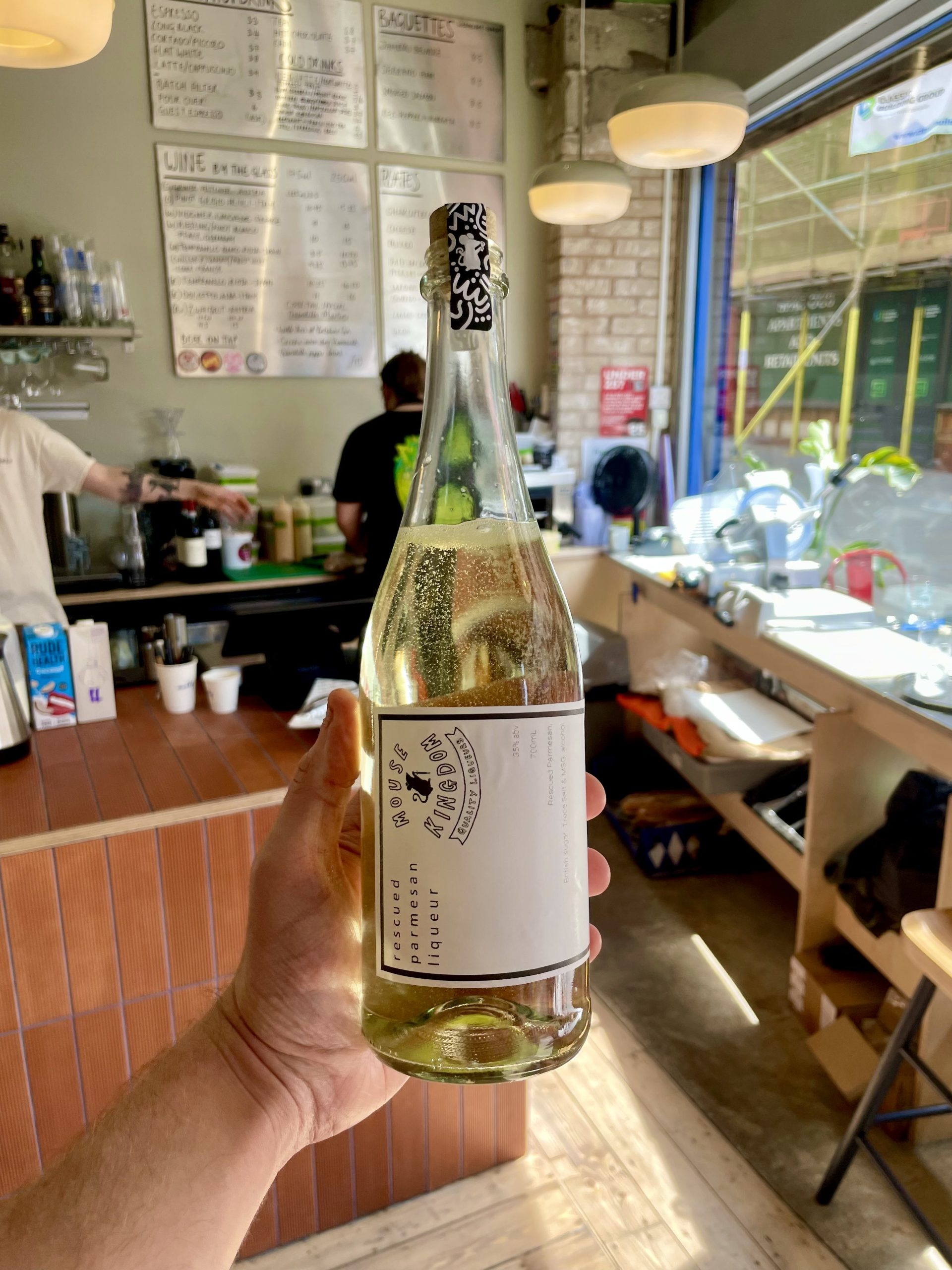
    Waste Parmesan Liqueur : The wild west of Liqueurs.

    It’s cheesy, it’s savoury, it’s built from restaurant off-cuts that would otherwise go in the bin and it might surprise you…

    We haven’t launched it yet. Here’s your sneak preview:

    Ingredients:

    We collect waste Parmesan rinds every week from Rudy’s Pizza Napoletana in Ancoats — cheese that would otherwise be thrown away. We fat-wash it into UK-grown winter wheat vodka at 48% ABV, infusing for two months before diluting down to a bottled strength of 35% ABV.

    The result is exactly what you’d expect from something built on real Parmesan rind. What you might not expect is the flavour…

    Here’s what’s actually in Parmesan’s flavour :

    Parmesan is one of the most chemically complex ingredients, and most of that complexity isn’t what you’d call cheese at all.

    Parmigiano-Reggiano aroma comes from esters — compounds that smell nothing like cheese on their own.

    Esters vary by distillation, they’re the funky fruit notes at the beginning of the run you’re striving to collect.

    They smell like pineapple, banana, apricot, pear and floral in character. Buried further in are rose- and honey-like floral notes, the same family of aromatic compound found in some perfumes.

    What we found when we started infusing: underneath and around the cheese, there’s a genuinely surprising amount of tropical fruit-ester character, and a super sour floral, honeyed note that most people wouldn’t associate with cheese.

    The acidity in our final liqueur is also more pronounced than you’d expect, which again means this might surprise you if you pair it in a whiskey highball.

    In short: Parmesan isn’t really a flavour.

    It’s thousands of flavours, and we’ve carried everything we found in the ingredient, into the bottle.

    With a trace of MSG, a trace of salt, and a small amount of sugar for balance, all of which will be listed in full on the label, as with every Mouse Kingdom release.

    Why we make liqueurs out of waste:

    The UK throws away a lot of food. According to WRAP, the UK’s food system generated 9.5 million tonnes of food waste in 2018, with the hospitality and food service sector alone responsible for just under 1.1 million tonnes of it.

    Parmesan rind is a small but very real part of the picture: it’s one of the most commonly binned off cuts in any italian restaurant that uses the cheese seriously, because most recipes only call for the grated deliciousness, not the hard outer rind left behind.

    That’s where Waste Parmesan Liqueur lives. Rind that would otherwise go into food waste gets collected, washed, and infused.

    Not recycled in the abstract sense, but used for the thing it’s made for : carrying flavour. It’s the same logic behind our other waste-driven releases.

    Riding the parmesan espresso martini wave?

    If you’ve been on TikTok ever, you’ve probably seen the parmesan espresso martini trend…

    Vodka, coffee liqueur, and espresso, shaken and strained into a cheese-rimmed glass.

    It’s a joke until you taste it, when it makes sense: espresso martinis already balance bitter, sweet and a savoury edge.

    Suggested serves :

    Waste Parmesan Espresso Martini


    50ml vodka, 25ml Waste Parmesan Liqueur, 25ml fresh espresso, shaken hard over ice and double strained.

    Parmesan liqueur does the fat-washing TikTok doesn’t, finish with a light grate of Parmesan over the foam.

    Parmesan Dirty Martini
    60ml gin or vodka,

    10ml dry vermouth, 10ml Waste Parmesan Liqueur, stirred over ice.

    Garnish with a Parmesan crisp instead of an olive.

    Dilly Delli Bloody Mary
    As served at Dilly Delli in Stockport — watch the full story here. Built with Waste Parmesan Liqueur added to the mix for a deeper umami base.

    Parmesan Margarita
    40ml tequila, 10ml Waste Parmesan Liqueur, 20ml lime juice, 10ml sugar syrup shaken over ice, served over a salt-and-black-pepper rim.

    Try it, you might not like it. 🔥

    Parmesan Bee’s Knees
    35ml gin, 15ml Waste Parmesan Liqueur, 15ml honey syrup, 20ml lemon juice, shaken and fine-strained.

    The floral notes & acidity hiding in MK Parmesan Liqueur elevate a classic Bee’s Knees.

    Why this one matters

    We’ve been collecting waste parmesan for a year now, studying its flavour and complexity.

    We’d like to release it to the world soon, because we can’t keep it to ourselves any longer. You need to try this…

    Full ingredient list, tasting notes and launch date to follow. Sign up for release alerts so you’re not the one asking where the cheese went three weeks too late.

    Sign up here

    Sources:

  • Baileys the B Corp: Real Progress, Real Limits

    Baileys the B Corp: Real Progress, Real Limits

    Baileys Original Irish Cream is the liqueur most people picture when they hear the word liqueur: Irish whiskey, chocolate powder and dairy cream blended into a smooth, sweet drink that comes in at 17% ABV. It first appeared in 1974 and is now the best-selling liqueur in the world.

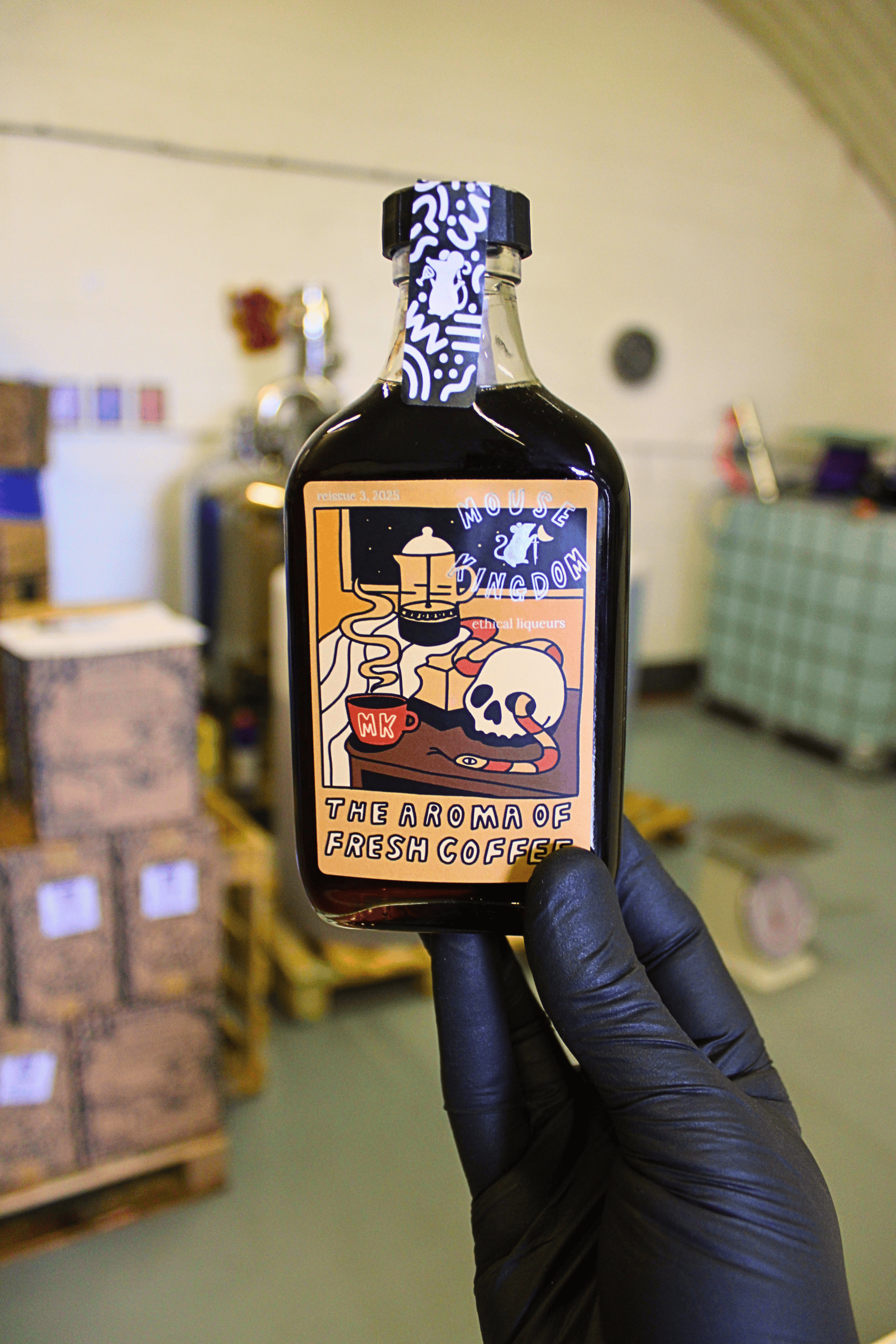
    For a Baby Guiness twist, try Manchester’s Mouse Kingdom, whose coffee liqueur is made from beans roasted locally at Heart and Graft, with cafetiere ground coffee brewed over 48 hours and blended with English wheat vodka.

    To make one, fill a shot glass about two-thirds full with MK coffee liqueur, then gently float Baileys on top over the back of a spoon so it forms the head.

    Shop Mouse Kingdom Coffee Liqueur

    It’s a small, independent brand next to a global giant, which makes it a fitting starting point for a post about what “good business” means at very different scales.

    thethreedrinkers

    thewhiskyexchange

    A Good Liqueur, But How Good is the Business behind it?

    Baileys is a certified B Corporation. It first earned the badge in October 2022 and has since recertified, with a 13 point uplift and a score of 95.5. That’s a result for the world’s best selling liqueur.

    It’s also worth asking what the badge can and can’t tell us about a business of Baileys’ size, especially when diageo is making decisions that don’t follow the same values.

    What the score shows

    B Corp certification assesses a company across five areas:

    Governance, Workers, Community, Environment and Customers.

    Baileys publishes its breakdown. Workers is the strongest at 31.4, followed by environment at 26.6 and community at 21. Governance scored 11.7 out of 20, and customers came in lowest at 4.6.

    The governance change is important. Baileys says it amended its legally binding Company Constitution to prioritise people and the planet alongside profit. That’s a structural commitment, not a slogan.

    Their environmental work is substantive. The brand says it has run on 100% renewable electricity since 2008 and aims for fully recyclable, reusable or compostable packaging by 2030.

    The most meaningful part is the farm-level work with Tirlán, baileys farmer-owned dairy supplier, including the Sustainable Cream Initiative and the Sustainable Farming Academy. Dairy is where much of Baileys’ footprint sits, so that’s where effort counts.

    The bigger question

    Baileys doesn’t operate alone. It sits within Diageo, and recent news from the parent tells a story…

    Diageo has removed responsible drinking and sustainability targets from the measures that determine long-term rewards for its management, and these previously made up 20% of senior executives’ long-term bonuses.

    “The number of performance measures in the long-term plan is being cut from eight to three. The three that remain are earnings per share, cumulative cash flow and adjusted return on invested capital.”

    This comes as new chief executive Sir Dave Lewis has begun a major restructure, with Diageo shedding nearly 2,000 employees in the past financial year.

    It’s only fair to give Diageo’s side.

    The chair has said that Spirit of Progress is no longer part of the long-term incentive plan, but the work done in recent years has embedded its priorities more deeply in the business and will remain a focus for the board.

    The company also says the board will continue to set targets, monitor performance and report against all areas of ESG.

    There’s a respectable argument that incentives are a blunt tool, and that once sustainability is part of how a business operates it no longer needs a bonus attached. Diageo also isn’t alone in stepping back from ESG-linked pay, which reflects a wider mood in corporate life, sadly.

    What a company pays its leaders to achieve is one of the clearest signals of what it really prioritises.

    Taking sustainability and responsible drinking out of that equation shifts them from binding targets to things the board could do, but probably wont. Probably.

    Where the badge runs out

    A B Corp score measures how well a company does relative to a framework of good practice.

    It doesn’t measure whether the underlying model is sustainable in an absolute sense, and those are different questions.

    What this means for the definition of B Corp

    None of this means the people at Baileys aren’t trying, and much of what they’ve built is real.

    B Corp certification only means something if it stays hard to earn and hard to keep, and if consumers can trust that the logo signals a fundamentally different way of doing business.

    When a brand at the heart of a global drinks conglomerate carries the logo, while its parent strips sustainability from executive pay and pursues cost-cutting under financial pressure, many humans will ask what the badge is really certifying.

    Some will decide it measures a company’s ability to score well on a questionnaire rather than its willingness to put its principles ahead of profit.

    Once a badge is worn by everyone, it stops distinguishing anyone, and the B Corp movement should worry about that more than it worries about Baileys.

  • Are you a Man or a Mouse? Mouse Kingdom Liqueurs and ethical production

    Are you a Man or a Mouse? Mouse Kingdom Liqueurs and ethical production

    It just takes a glance to see how serious the world’s climate predictions have become.

    2024 saw the biggest ever jump in CO2 emissions. Greenland is losing about 30 million tonnes of ice every hour.

    In the face of this, it’s bewildering how slow the drinks industry has been to embrace true sustainability.

    “At Mouse Kingdom, we think that only radical sustainability action is good enough,” says Felix Crosse, Founder.

    “I won’t get everything perfect at first and I don’t mind that. What’s important is to act: you learn and improve as you go along.”

    Felix isn’t afraid of complexity. He is tackling almost every element of Mouse Kingdom’s sustainability impact simultaneously.

    How?


    Hesitation no: action yes

    “100 per cent of our food and cardboard waste is recycled,” Felix explains.

    “80 per cent of that is done onsite in our vermicomposting bins. The remainder we give to local allotment projects.

    “We use a 100 per cent renewable energy supplier. We cancelled our general waste collection completely early in 2025, and we haven’t needed a collection since.

    “We recycle 100 per cent of our plastic waste, travelling on ebikes ourselves to do it. We also travel on ebike to 95% of the events we attend, and deliver orders personally in Manchester.”

    “We actively source food-waste for our Liqueurs, collecting waste citrus fruit from central Manchester every friday.

    Impressive. What’s the deeper story?


    Radical bravery for sustainable gain

    More often than not, sustainability has a deeper twist, which many don’t understand.

    For example, UK renewable energy is supplied on the promise and trust of the electricity company. UK drinks firms clearly can’t travel the company day in day out, checking where their power comes from.

    Equally, Felix can ensure 100 per cent of Mouse Kingdom’s plastic is collected for recycling. It’s less easy for him to hop aboard a container ship – and check none of this plastic ends up on an Indian beach.

    “We’re very much into controversial and challenging ideas,” says Felix.

    “I am happy to raise negatives with our production, because that’s how we all improve. I’m always keen to see real numbers and radical honesty when it comes to sustainability performance.”

    The true power of innovation: artisan distilleries and breweries


    The devil is in the detail

    There’s a stunningly simple way to bypass worries on how and where recycling is done, or the true proportions of renewables built into energy contracting.

    “If you use less energy in the first place, through more efficient lights, for example, and timing your production around when the grid draws more from renewables, you have more control and you’re less affected by highs and lows in the UK’s energy market,” says Felix.

    “I’m pondering onsite solar generation options. And on plastics, when I can totally avoid using them at all, there will be no concerns over how or where they are recycled.”

    A radical mindset for courageous action. People and planet take precedence over profit.

    Shop Mouse Kingdom Liqueurs

  • Back by Popular Demand: Mouse Kingdom’s Wild Garlic Liqueur Returns for Winter 2026

    Back by Popular Demand: Mouse Kingdom’s Wild Garlic Liqueur Returns for Winter 2026

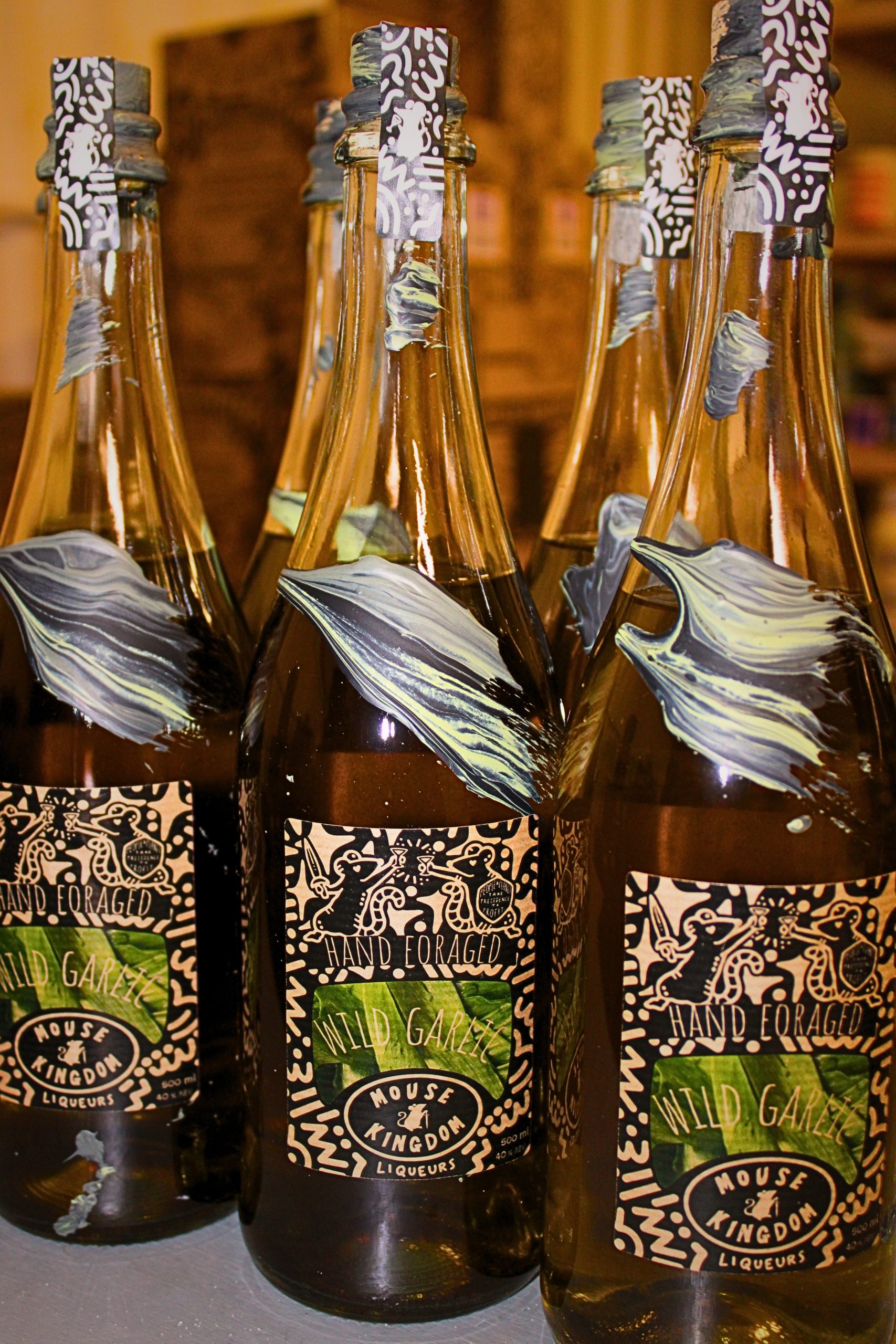
    Every spring, for one short window, the woodlands around Manchester turn white and pungent with ramsons, wild garlic, Allium ursinum. Carpeting the forest floor before the tree canopy closes in and the season disappears as fast as it arrived. It’s one of the UK’s shortest, most-anticipated foraging windows, and it’s exactly why Mouse Kingdom’s Wild Garlic Liqueur only ever gets one small run a year.

    Last year’s release sold out in exactly 7 days, and it’s easy to see why: an entirely savoury, green, authentic and unique liqueur. This year, the recipe returns with the same seasonal ethos, but another chapter in the Mouse Kingdom story.

    The story so far

    Mouse Kingdom has never been a brand that plays it safe. Since 2022, the Manchester-based liqueur maker — founded by veterans of The Alchemist bar group — has built a reputation on flavour-first liqueurs made with real, named ingredients (no small feat in a category where UK law doesn’t even require it), storybook packaging illustrated by human hands, and small, collectible print runs that sell out and never get repeated in quite the same way twice.

    Wild Garlic was one of the boldest moves yet: a savoury liqueur in a category dominated by sugar and berries. It proved that Mouse Kingdom’s audience wanted more than sweetness, they wanted something with a sense of place and season.

    What to expect this year

    • Base spirit: UK-grown winter wheat vodka, in keeping with the rest of the Mouse Kingdom range
    • Key ingredient: Foraged wild garlic (ramsons), picked earlier this year, with more sharp green acerbity.
    • Character: Green, savoury and grassy up front, balanced with almost citrus acidity and a touch of gentle sweetness & salt so it stays sippable and mixable.
    • ABV: 40%
    • 70cl, limited print run

    Suggested serves

    The Ramson Martini 30ml Mouse Kingdom Wild Garlic Liqueur, 15ml Gin or Vodka, 15ml dry vermouth, stirred over ice, strained into a chilled coupe, garnished with a twist of lemon peel. A savoury twist on the classic dirty martini, no olive brine required.

    Wild Garlic Bloody Mary Swap a measure of your usual base spirit for 25ml Mouse Kingdom Wild Garlic Liqueur in a classic Bloody Mary build — the liqueur’s natural savoury note does a lot of the seasoning work for you.

    Savory Gin and Tonic Mix a measure of your usual base gin with 25ml Mouse Kingdom Wild Garlic Liqueur and add a savory tonic — garnish with herbs and spices.

    Neat, or over ice. Served alongside premium charcuterie, olives, breads, cheeses & pickles.

    Why it won’t last long

    True to form, this is a limited release — once the wild garlic season ends, so does the batch. If last year’s run is anything to go by, it’ll be gone within the week. So pick up yours fast.


    Shop the Mouse Kingdom Wild Garlic Liqueur while stocks last.

  • What Is Blue Curaçao? A Complete Guide (Plus an Ethical Modern Alternative)

    What Is Blue Curaçao? A Complete Guide (Plus an Ethical Modern Alternative)

    If you’ve ever ordered a Blue Lagoon, a Blue Hawaiian, or wondered why a cocktail is glowing an electric shade of blue, you’ve met blue curaçao. It’s one of the most recognizable ingredients behind the bar and famous for its color as much as its flavor, but most people don’t actually know what it’s made from or where it comes from. Here’s everything you need to know.

    The Origins: Curaçao the Island, Curaçao the Liqueur

    Curaçao liqueur takes its name from the Caribbean island of Curaçao, off the coast of Venezuela. The island is home to the laraha citrus fruit, a bitter, inedible orange that grows almost nowhere else. Dutch settlers discovered that the dried peel of the laraha, despite the fruit itself being too bitter to eat, produced a fragrant oil once processed, and that oil became the base for a distinctive orange liqueur.

    Traditional curaçao liqueur is made by macerating or distilling these dried orange peels with a neutral spirit, then sweetening the result. On its own, it’s a clear or amber-colored liqueur with a bittersweet orange flavor.

    So Why Is It Blue?

    Here’s the twist: curaçao isn’t naturally blue. The blue color is added, typically with a food-safe dye. The blue version was popularized in the mid-20th century as a marketing move — bartenders and brand producers realized that a vividly colored liqueur could make cocktails look as striking as they tasted, and “blue curaçao” was born as a category of its own.

    Blue curaçao tastes essentially the same as standard (clear or orange) curaçao — orange peel, citrus, a touch of sweetness — the color is purely cosmetic. It’s what gives drinks like the Blue Hawaiian, Blue Lagoon, and Purple Rain their signature tropical-ocean hue.

    What Does Blue Curaçao Taste Like?

    Expect:

    • Bright orange peel notes, both sweet and slightly bitter
    • A clean, citrusy sweetness rather than a heavy, syrupy one
    • Low-to-moderate alcohol content, usually in the 15–25% ABV range, making it easy to mix
    • A triple-sec-adjacent flavor profile. Many people compare it directly to triple sec or orange curaçao, just blue

    It’s typically used in small amounts as a mixer or modifier, not sipped on its own, though it can be enjoyed neat or on ice.

    Common Uses for Blue Curaçao

    • Cocktails: Blue Lagoon, Blue Hawaiian, Blue Margarita, Purple Rain, Screwball.
    • Baking and desserts (cakes, macarons, drizzles) where a pop of blue is wanted
    • Layered shots, thanks to its distinct color separating visually from other spirits

    A Modern Alternative: Mouse Kingdom Blue Liqueur

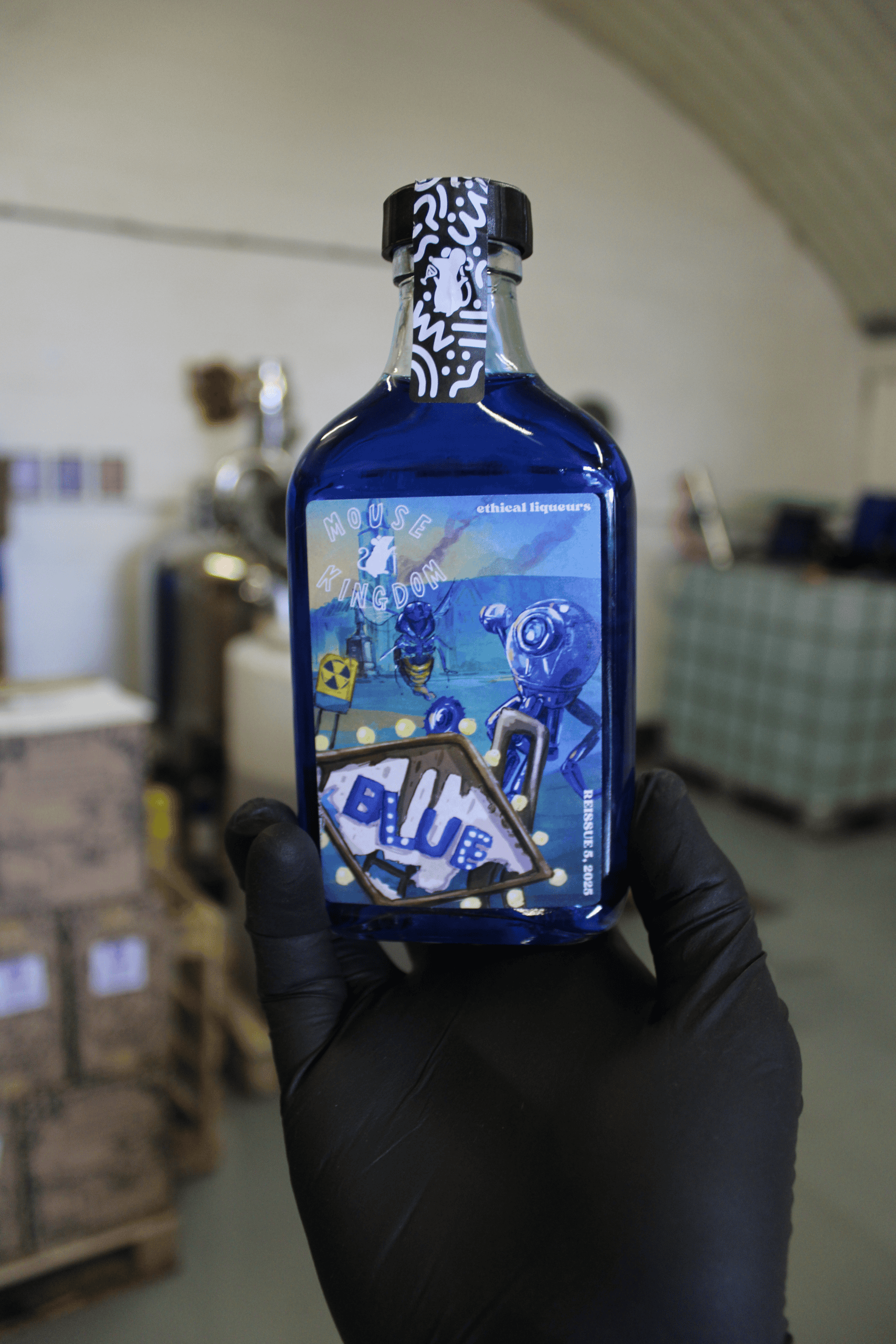
    If you’re shopping for blue curaçao today, you’ll likely come across Mouse Kingdom Blue Liqueur, a Manchester-made ethical citrus liqueur that’s positioned as a direct substitute. It’s built from winter wheat, lemon, grapefruit, and both bitter and sweet orange peel, giving it a citrus-forward profile designed to work as an alternative to traditional blue curacao in cocktails.

    It’s also the only blue curacao made from rescued waste juiced fruit. Every week bars in Manchester juice, and on the day that they juice Mouse Kingdom Liqueurs collects the waste peel via ebike. The peel is hand sorted, cleaned and then goes straight into their 380L pot still to distil their next batch.

    It’s bottled at 70cl and 20% ABV, and available both on their website, and the Whiskey Exchange, in the UK:

    Mouse Kingdom Blue on the Whiskey Exchange

    What makes it a useful stand-in:

    • Citrus complexity: Combining grapefruit and lemon alongside orange peel gives it a slightly more layered profile than some mass-market blue curaçaos, which can lean one-note sugary-orange.
    • Drop-in usability: It’s designed to work in the same recipes — Blue Lagoons, Blue Margaritas, Purple Rains — without adjusting your ratios.
    • Part of a wider range: Mouse Kingdom also produces liqueurs in flavors like strawberry, passion fruit, coffee, and orange marmalade quad sec, so if you like the blue one, there’s a broader lineup worth exploring for your home bar.

    Blue Curaçao vs. Triple Sec vs. Regular Curaçao — What’s the Difference?

    LiqueurColorBase FlavorCommon Use
    Curaçao (traditional)Clear/amberBitter orange peelClassic cocktails, orange-forward drinks
    Blue CuraçaoBright blueSame as above, dyedTropical/visual cocktails
    Triple SecClearSweeter orangeMargaritas, sours

    In practice, blue curaçao and triple sec are close enough in flavor that they’re often used interchangeably as the real differentiator is color, not taste.

    Quick FAQ

    Is blue curaçao alcoholic?
    Yes — most bottles range from 15–25% ABV, though this varies by brand.

    Does blue curaçao stain?
    The dye can stain light fabrics if spilled, so it’s worth being a little careful when pouring.

    Can I substitute blue curaçao with something else?
    Yes. Triple sec plus a drop of blue food coloring is a classic hack, or you can use a purpose-made alternative like Mouse Kingdom Blue Liqueur, which is formulated specifically to replace it in recipes.

    Is blue curaçao vegan?
    Most brands are, but always check the label, since some clarifying or coloring agents vary by producer.

    Shop Mouse Kingdom Blue Curacao

  • Chicken Wing Liqueur : Inside Mouse Kingdom x Bunny Jackson’s Wildest Collab Yet

    Chicken Wing Liqueur : Inside Mouse Kingdom x Bunny Jackson’s Wildest Collab Yet

    If you thought “chicken wing liqueur” was a joke someone made after one too many spicy margs, you’d be absolutely correct.

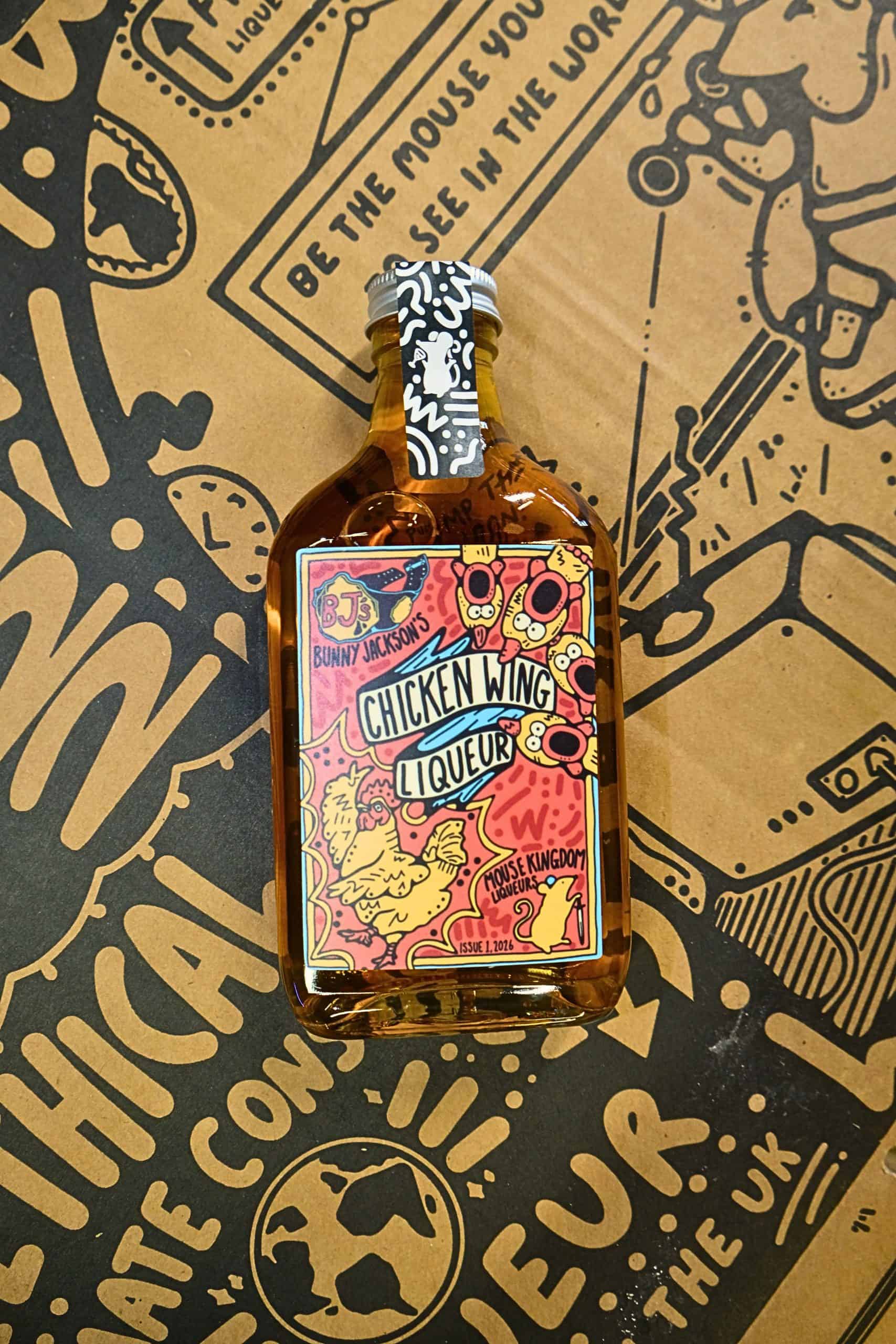
    Manchester’s Mouse Kingdom Liqueurs has teamed up with dive bar and wing aficionistas Bunny Jackson’s to create exactly that — a chicken containing, oily, savoury, spicy chicken wing liqueur, built for cocktails and designed for arguments at the bar.

    It’s EASILY the strangest liqueur launch of 2026, and it’s got the internet’s attention for good reason. Here’s everything you need to know: what’s in it, how it’s made, why the heck it exists, and three cocktails that you can make with it.

    What Is Chicken Wing Liqueur, Exactly?

    Bunny Jacksons Chicken Wing Liqueur is a 35% ABV spirit made by fat-washing & redistilling chicken wings, Bunny Jackson’s signature spice rub, and their house wing sauce into a UK winter wheat vodka base. The result is a rich, oily liqueur with a multilayered savoury and spice profile closer to gravy than a liqueur, and built specifically to be used in cocktails BUT its also pretty damn tasty sipped neat.

    It’s available in a 700ml bottle as well as a 200ml mini, and, true to Mouse Kingdom’s reason to be, every label run is a limited one-off design, even though the flavour inside stays consistent bottle to bottle.

    Why Did They Make a Chicken Wing Liqueur?

    Mouse Kingdom Liqueurs isn’t your average distillery. Founded in Manchester by ex-bartender Felix, the brand has built its whole identity around honesty about ingredients other producers would never consider. Rescued citrus peel, and foraged ingredients already feature across their range, so a savoury, waste-conscious collaboration with a mancunian wing joint was always going to happen.

    Bunny Jackson’s, the exceptional Manchester dive bar, is built around cheap, delicious wings, and whiskey, with no pretension.

    This collaboration was “either going to make us millionaires, or send us to jail”.

    It’s the only Chicken Wing Liqueur in the world, and it’s made to prove that savoury, umami-driven flavours belong behind the bar and in your drinks cabinet just as much as a bottle of rhubarb gin does.

    How It’s Made: The Production Process

    Chicken wing liqueur doesn’t come easy.

    • Base spirit: UK-grown winter wheat vodka, which we use to infuse and redistill wing liq’.
    • Fat-washing: Chicken wings are used to fat-wash the spirit, a technique where fat from a cooked ingredient is infused into alcohol, then filtered & frozen out, leaving behind the flavour without the oils.
    • Redistillation. From the infused base deliciousness, we distil about 50% of the batch, to capture aromatics & spice.
    • Flavour layering: Bunny Jackson’s own spice rub and wing sauce are cooked into the wings, along with red chilli, onion, sugar, and salt.
    • Waste-conscious extras: Rescued onion peels, collected from bars across Manchester as part of Mouse Kingdom’s food waste collection scheme, add extra savoury depth.
    • A touch of MSG: for the umami hit that makes it all gravy.

    The finished liqueur contains celery, milk and sulphites, and may contain traces of all 14 major allergens due to the shared kitchen and bar ingredients involved, so please check the label carefully before serving to guests.

    This isn’t a one-off publicity stunt production either — it fits Mouse Kingdom’s wider ethos of having fun in 2026, and you’ll find it available soon at the Whiskey Exchange!

    3 Cocktails to Try With Chicken Wing Liqueur

    This is not a simple liqueur. It’s distilled intentionally, to be poured in cocktails where a savoury, spiced backbone makes the drink. Here are three to start with:

    1. Spicy Chicken Wing Margarita

    A classic margarita gets a savoury, spiced overhaul. The chicken wing liqueur adds a smoky, umami depth that plays beautifully against lime and tequila, turning a familiar cocktail into something which will blow your mind.

    You’ll need: 25ml tequila, 20ml lime juice, a couple of spoons of sugar (or 15ml of sugar syrup) and 25ml of Bunny Jacksons Chicken Wing Liqueur, we suggest a chilli-chicken-salt rim. But you can grab a red chilli and rub it round the rim of the glass after you shake it over ice.

    2. The Ultimate Bloody Mary

    If any cocktail was built to take a savoury liqueur, it’s the Bloody Mary. 50ml of chicken wing liqueur intensifies the umami, spice, and general “hair of the dog” energy of the drink — arguably its most natural home.

    You’ll need: vodka, tomato juice, Worcestershire sauce, Tabasco, lemon juice, 50ml of chicken wing liqueur, and whatever you fancy for your Bloody Mary garnish.

    We suggest an actual chicken wing for garnish, sourced directly from bunnys.

    3. The Dirtiest Martini You’ve Ever Had

    Forget olive brine — this is a martini built for people who take “dirty” seriously. Chicken wing liqueur adds savoury weight and spice to a classic gin or vodka martini, making it richer, saltier, and considerably better.

    You’ll need: 25ml ofgin or vodka, 15ml of dry vermouth, 25ml of of Bunny Jacksons Chicken Wing Liqueur & your usual brine, garnished with whatever exceptional olive or meaty treat you fancy.

    Stirred and served ice cold in a chilled Martini glass.

    Feeling brave? Mouse Kingdom themselves have floated a fourth idea on the product page: a blue cheese and chicken wing milkshake. You can find it at Bunnys now… If you dare.

    Where to Buy Mouse Kingdom x Bunny Jacksons Chicken Wing Liqueur

    The liqueur is available directly from Mouse Kingdom Liqueurs, based in central Manchester, in a 700ml full-size bottle and a 200ml mini, or you can grab a bottle at Bunny Jackson’s. As with all of our releases, expect limited label runs, small batches, and a strong chance it sells out so get there fast.

    Drink responsibly, and have a wet wipe ready while you drink it.

    Shop the Wing Liq here Mouse Kingdom Wing Liqueur.

  • Why We List Every Ingredient (Even Though UK Law Doesn’t Require It)

    Why We List Every Ingredient (Even Though UK Law Doesn’t Require It)

    Pick up any bottle of alcohol in the UK and you’ll notice something odd: there’s no ingredients list at all. Unlike food, alcoholic drinks aren’t required by UK law to disclose what’s actually in them. A liqueur has to legally tell you the name, ABV, the volume in the bottle, who the producer is, units per volume, allergen info, and not much else.

    We think that’s wrong, and it’s why every Mouse Kingdom label lists exactly what’s inside the bottle.

    What “radical honesty” actually means

    It’s a phrase we infuse into every bottle, and it’s worth being specific about what it involves in our distillery.

    Each of our liqueurs carries a full ingredient list on the label including the fruit, the base spirit, where the sugar comes from, any spice or botanical additions, and how it’s been diluted to final strength – always with Mancunian dilution.

    Mancunian dilution is filtered Manchester tap water. We are proud to include this as an ingredient, because balance and dilution are incredibly important in how flavour plays out in the glass.

    Nothing hidden behind “natural flavourings” or a proprietary percentage which makes no sense in real liquid. See Passoa for example…

    Take our Dark Berries Liqueur as an example: Raspberry juice, Blackcurrant juice, UK wheat vodka, British sugar, dilution. That’s the whole list. No mystery, no marketing language standing in for a straight answer.

    Why the law doesn’t require it, and why that’s a problem

    Food producers in the UK have to declare allergens and full ingredient lists by law. Alcohol is exempt from most of that requirement — a legacy of how alcohol regulation developed separately in the 1970s from food labelling, and one that hasn’t caught up with how people actually drink in the 2020s. The result is that you can walk into a corner shop, buy a bottle, and have no idea what’s actually in your glass.

    For most producers that’s convenient, because it lets less interesting ingredients like cheap flavouring & artificial colourings stay invisible.

    We believe you have a right to know what you’re drinking.

    What this means for how we make liqueurs

    Listing every ingredient isn’t just a labelling choice. It changes how we make the product in the first place.

    If something’s going on the label, we have to be able to stand behind it. That’s why our recipes lean on real fruit, considered sourcing, and balanced acidity rather than excessive sugar.

    Transparency and quality are the same thing : it’s harder to hide a shortcut when you’re committing to print exactly what went into the bottle.

    It also means allergen information is genuinely useful rather than a generic disclaimer. If you need to know whether a liqueur contains a particular ingredient, the answer is on the bottle.

    The bigger picture

    We don’t think ingredient transparency should be a point of difference — we think it should be standard practice across the industry, the same way it already is for food.

    Until UK law catches up, we’ll continue to be honest about what’s in the bottle rather than rely on a legal loophole that happens to work in our favour.

    Each liqueur we distil carries its full ingredient list on the label. If you’d like to check any of them before you buy, you’ll find them on every product page too.

    Shop the range at mousekingdomliqueurs.co.uk.

  • What “Balanced for Cocktails” Actually Means (and Why Most Liqueurs Get It Wrong)

    What “Balanced for Cocktails” Actually Means (and Why Most Liqueurs Get It Wrong)

    “Balanced for Cocktails” sits right on our homepage, and it’s a phrase we hold absolutely centrally to our product range and production methods. It’s also a phrase that’s easy to nod along with and hard to actually explain. So here’s what it means in practice, and why we think most liqueurs on the market are still getting it wrong.

    The 1820s problem

    Most classic liqueur recipes were developed roughly two centuries ago, in an era with very different priorities to ours. Before refrigeration and modern preservation, high sugar content wasn’t a stylistic choice — it was a practical requirement. Sugar preserved flavour and extended shelf life in a way nothing else reliably could.

    That recipe logic has survived largely unchanged. Walk into most shops today and the liqueurs on the shelf are, at their core, still built around 200-year-old preservation priorities — a lot of sugar, with flavour treated as secondary to sweetness. That made sense in the 1820s. It doesn’t make as much sense now, when sugar is an everyday commodity, and commonplace in every product on the shelf.

    What we do differently

    We make our liqueurs for palates in the 2020s, not the 1820s. In practice, that means treating sugar as one tool among several, rather than the whole recipe. Acidity and bitterness get used deliberately, alongside sweetness, to keep a liqueur from collapsing into a single flat note. ABV is set to suit how the liqueur is actually meant to be used, rather than defaulting to whatever is traditional for the category.

    The test we apply isn’t “does this taste nice on its own?” It’s “does this still taste good once it’s part of a cocktail, sitting alongside a spirit, citrus, and ice?” Those are two different questions, and a lot of liqueurs are only built to answer the first one.

    Why this matters more in a mixed drink than a neat pour

    A liqueur that’s mostly sugar can taste perfectly pleasant sipped on its own. The problem shows up the moment you build it into a cocktail. Dilute a high-sugar, low-acid liqueur with a spirit, citrus, and ice, and the sweetness usually still dominates — you end up with a drink that tastes more like the liqueur’s sugar content than any of its actual flavour. That’s the flattening effect that gives sweet cocktails a bad name, and it’s rarely the spirit’s fault. It’s usually the liqueur.

    Balance the sugar against real acidity and some bitterness, and the opposite happens: the liqueur’s actual character — the coffee, the berry, the citrus, whatever it is — stays audible through the whole drink, rather than getting buried under sweetness the moment it’s mixed.

    How this plays out across our range

    It’s part of why our Dry Limoncello sits at a higher ABV and lower sugar level than most limoncello on the market — built to survive being lengthened into a spritz, not just served as a shot. It’s why our coffee liqueur leans on real acidity rather than sugar to carry the coffee character through an Espresso Martini. And it’s part of why Dark Berries picked up an award in the first place — bartenders noticed it held its own in spirit-forward drinks, not just fruity, sweet ones.

    The short version

    “Balanced for Cocktails” isn’t a marketing phrase we chose because it sounded good. It’s a specific design principle: sugar, acidity, and bitterness working together, and ABV set deliberately, so a liqueur still tastes like itself once it’s actually in a glass with everything else. Most liqueurs are built to taste good alone. We build ours to taste good in the drink they’re actually going into.

    Taste the difference yourself at mousekingdomliqueurs.co.uk/shop.

  • Big brand truth: why you’ve no right to know what’s in your drink

    Big brand truth: why you’ve no right to know what’s in your drink

    In the UK, an ‘alcoholic beverage’ is any drink with an alcohol content of more than 1.2 per cent alcohol by volume.

    But WILDLY, there is absolutely no law demanding alcoholic beverages display an ingredients list.

    So, next time you pick up a buzzball from bossman, there is fuck all chance you’ll know what your cocktail contains.

    Let alone where the mystery ingredients came from, which farmers grew them and how. Details on the pesticides involved in production or what, if anything, these producers were paid, in which part of the world. Or whether its made from real ingredients or flavourings, sourced from Milton Keynes.

    Why?

    UK drinks ingredients: an opportunity to obscure and greenwash?

    “We built a brand to speak about this,” says Felix Crosse, Founder, Mouse Kingdom.

    “Every UK producer in our industry doesn’t disclose ingredients at all – it isn’t required in the UK.”

    “These are big names: Au, Buzzballs, Tesco, Cointreau, Chambord, Kahlua, Bols, Aldi.”

    “I run Mouse Kingdom on the idea that transparency and radical accountability are essential to producing a liquid which people trust.”

    Why aren’t big brands doing the same?

    Big brand disclosure and a culture of silence

    If producers don’t tell consumers what’s in their drinks, it’s impossible for cocktail consumers and bars to apply any health, ethics, conscience or environmental purpose to what they buy.

    If your only business driver is money, this is good news.

    “You might prefer to avoid drinks using lemons grown in Peru, if you’re worried about the climate costs involved in transportation to the UK, decent wages for Peruvian farmers or land grabbing, for example,” says Felix.

    “None of us know what’s in big brand drinks.”

    Mouse Kingdom tells the truth. “We’ve been collecting waste lemons from bars in Manchester for 2 years now”. We will even tell you exactly where we get them: Bar Posie and Rudys Pizza Ancoats.

    “We collect lemon peel as a waste ingredient, to repurpose and create a flavour which otherwise would’ve been discarded.”

    Making exceptional Liqueurs. No waste. Fully, voluntarily-listed local ingredients. Radical transparency.

    Taxing purposeful choice?

    Remember, alcohol is big business. The Office for Budget Responsibility (OBR) estimates that alcohol duty revenue was £12.5 billion in 2024/25, and that it will rise to £14.1 billion in 2030/31.

    That’s a lot of tax revenue for the UK. But truth, knowledge and education is still slipping through the gaps, we need to trust our consumer and tell them what’s in the RTD’s and cocktails they sup.