Baileys Original Irish Cream is the liqueur most people picture when they hear the word liqueur: Irish whiskey, chocolate powder and dairy cream blended into a smooth, sweet drink that comes in at 17% ABV. It first appeared in 1974 and is now the best-selling liqueur in the world.
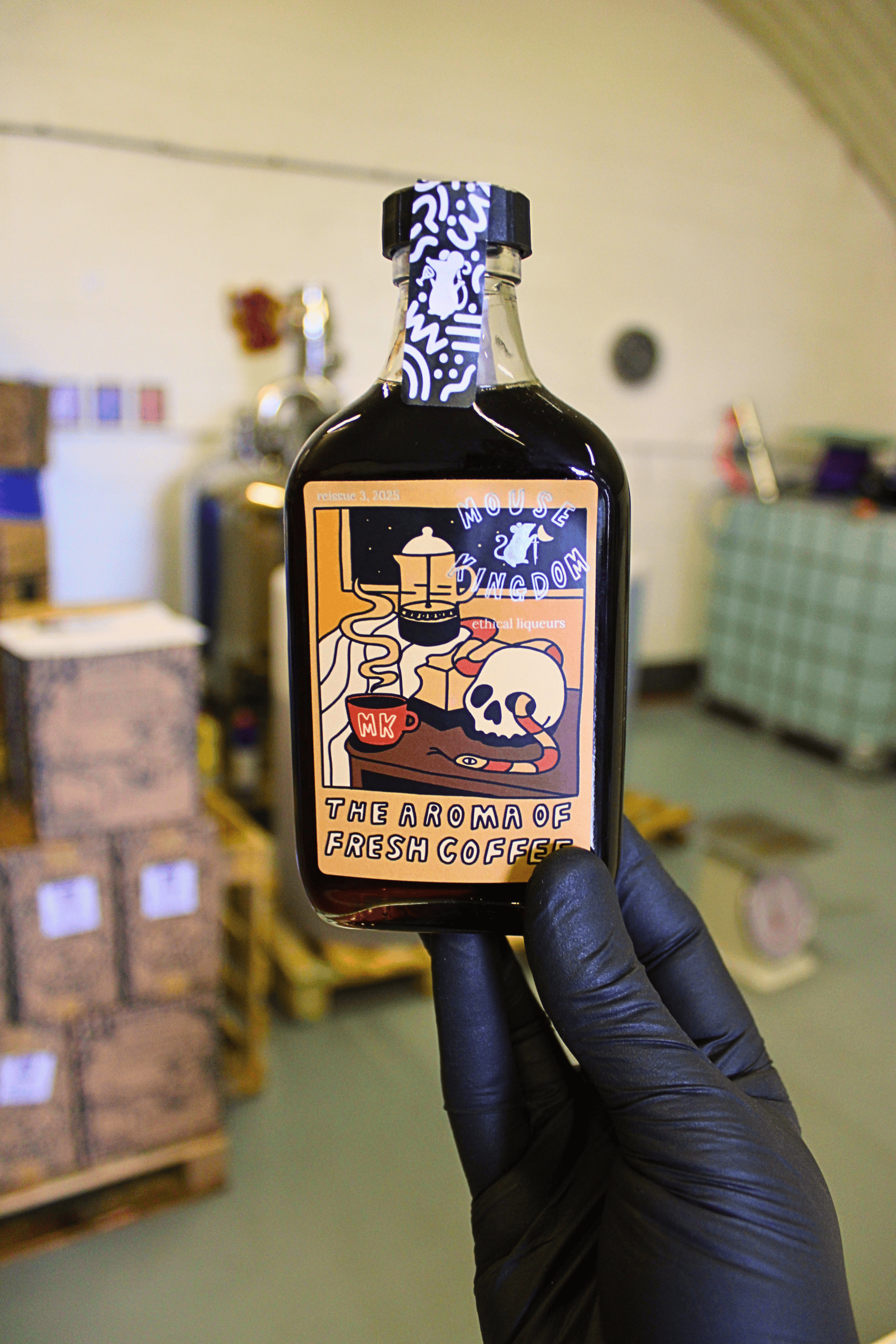
For a Baby Guiness twist, try Manchester’s Mouse Kingdom, whose coffee liqueur is made from beans roasted locally at Heart and Graft, with cafetiere ground coffee brewed over 48 hours and blended with English wheat vodka.
To make one, fill a shot glass about two-thirds full with MK coffee liqueur, then gently float Baileys on top over the back of a spoon so it forms the head.
Shop Mouse Kingdom Coffee Liqueur
It’s a small, independent brand next to a global giant, which makes it a fitting starting point for a post about what “good business” means at very different scales.
A Good Liqueur, But How Good is the Business behind it?
Baileys is a certified B Corporation. It first earned the badge in October 2022 and has since recertified, with a 13 point uplift and a score of 95.5. That’s a result for the world’s best selling liqueur.
It’s also worth asking what the badge can and can’t tell us about a business of Baileys’ size, especially when diageo is making decisions that don’t follow the same values.
What the score shows
B Corp certification assesses a company across five areas:
Governance, Workers, Community, Environment and Customers.
Baileys publishes its breakdown. Workers is the strongest at 31.4, followed by environment at 26.6 and community at 21. Governance scored 11.7 out of 20, and customers came in lowest at 4.6.
The governance change is important. Baileys says it amended its legally binding Company Constitution to prioritise people and the planet alongside profit. That’s a structural commitment, not a slogan.
Their environmental work is substantive. The brand says it has run on 100% renewable electricity since 2008 and aims for fully recyclable, reusable or compostable packaging by 2030.
The most meaningful part is the farm-level work with Tirlán, baileys farmer-owned dairy supplier, including the Sustainable Cream Initiative and the Sustainable Farming Academy. Dairy is where much of Baileys’ footprint sits, so that’s where effort counts.
The bigger question
Baileys doesn’t operate alone. It sits within Diageo, and recent news from the parent tells a story…
Diageo has removed responsible drinking and sustainability targets from the measures that determine long-term rewards for its management, and these previously made up 20% of senior executives’ long-term bonuses.
“The number of performance measures in the long-term plan is being cut from eight to three. The three that remain are earnings per share, cumulative cash flow and adjusted return on invested capital.”
This comes as new chief executive Sir Dave Lewis has begun a major restructure, with Diageo shedding nearly 2,000 employees in the past financial year.
It’s only fair to give Diageo’s side.
The chair has said that Spirit of Progress is no longer part of the long-term incentive plan, but the work done in recent years has embedded its priorities more deeply in the business and will remain a focus for the board.
The company also says the board will continue to set targets, monitor performance and report against all areas of ESG.
There’s a respectable argument that incentives are a blunt tool, and that once sustainability is part of how a business operates it no longer needs a bonus attached. Diageo also isn’t alone in stepping back from ESG-linked pay, which reflects a wider mood in corporate life, sadly.
What a company pays its leaders to achieve is one of the clearest signals of what it really prioritises.
Taking sustainability and responsible drinking out of that equation shifts them from binding targets to things the board could do, but probably wont. Probably.
Where the badge runs out
A B Corp score measures how well a company does relative to a framework of good practice.
It doesn’t measure whether the underlying model is sustainable in an absolute sense, and those are different questions.
What this means for the definition of B Corp
None of this means the people at Baileys aren’t trying, and much of what they’ve built is real.
B Corp certification only means something if it stays hard to earn and hard to keep, and if consumers can trust that the logo signals a fundamentally different way of doing business.
When a brand at the heart of a global drinks conglomerate carries the logo, while its parent strips sustainability from executive pay and pursues cost-cutting under financial pressure, many humans will ask what the badge is really certifying.
Some will decide it measures a company’s ability to score well on a questionnaire rather than its willingness to put its principles ahead of profit.
Once a badge is worn by everyone, it stops distinguishing anyone, and the B Corp movement should worry about that more than it worries about Baileys.
Leave a Reply