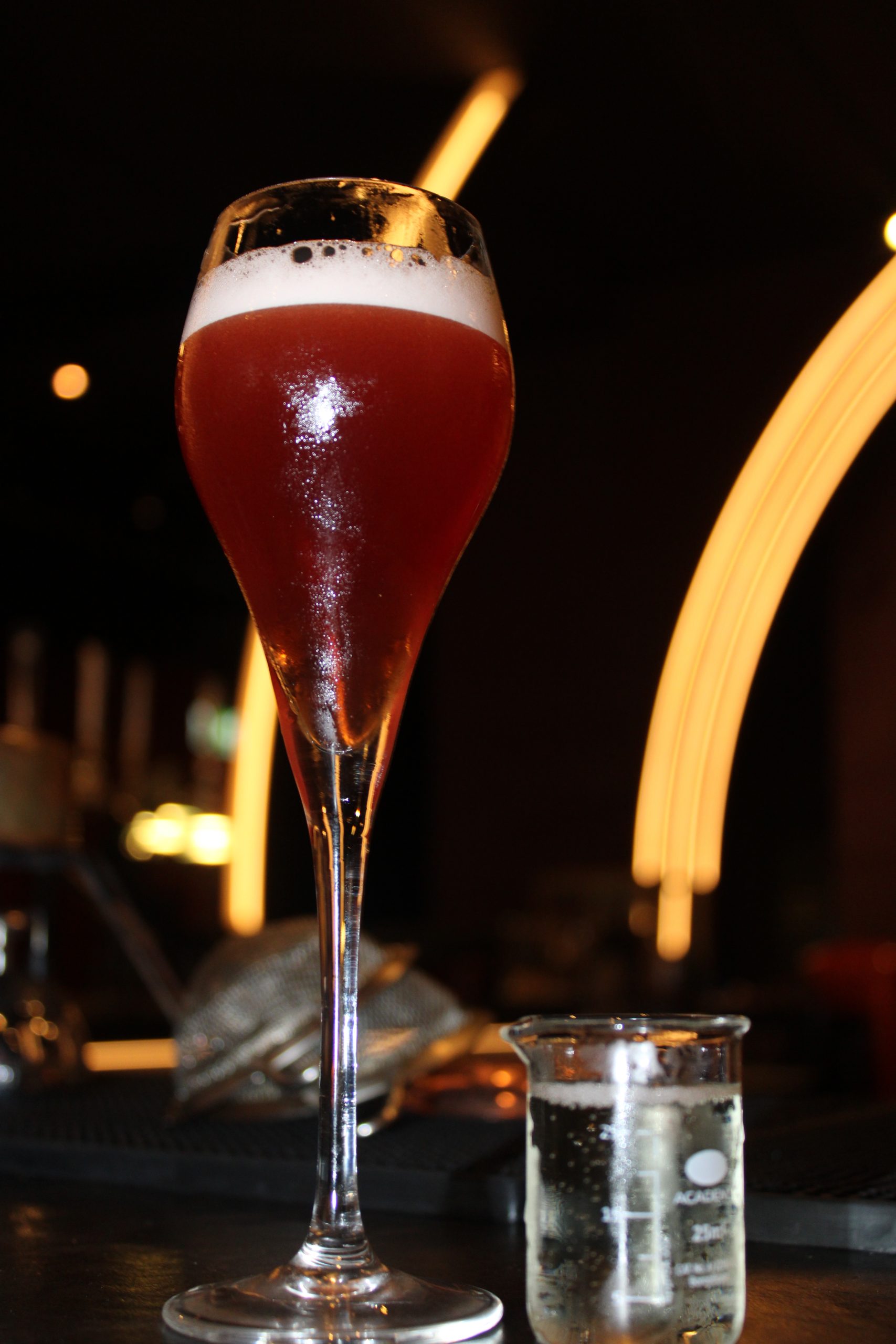
“Balanced for Cocktails” sits right on our homepage, and it’s a phrase we hold absolutely centrally to our product range and production methods. It’s also a phrase that’s easy to nod along with and hard to actually explain. So here’s what it means in practice, and why we think most liqueurs on the market are still getting it wrong.
The 1820s problem
Most classic liqueur recipes were developed roughly two centuries ago, in an era with very different priorities to ours. Before refrigeration and modern preservation, high sugar content wasn’t a stylistic choice — it was a practical requirement. Sugar preserved flavour and extended shelf life in a way nothing else reliably could.
That recipe logic has survived largely unchanged. Walk into most shops today and the liqueurs on the shelf are, at their core, still built around 200-year-old preservation priorities — a lot of sugar, with flavour treated as secondary to sweetness. That made sense in the 1820s. It doesn’t make as much sense now, when sugar is an everyday commodity, and commonplace in every product on the shelf.
What we do differently
We make our liqueurs for palates in the 2020s, not the 1820s. In practice, that means treating sugar as one tool among several, rather than the whole recipe. Acidity and bitterness get used deliberately, alongside sweetness, to keep a liqueur from collapsing into a single flat note. ABV is set to suit how the liqueur is actually meant to be used, rather than defaulting to whatever is traditional for the category.
The test we apply isn’t “does this taste nice on its own?” It’s “does this still taste good once it’s part of a cocktail, sitting alongside a spirit, citrus, and ice?” Those are two different questions, and a lot of liqueurs are only built to answer the first one.
Why this matters more in a mixed drink than a neat pour
A liqueur that’s mostly sugar can taste perfectly pleasant sipped on its own. The problem shows up the moment you build it into a cocktail. Dilute a high-sugar, low-acid liqueur with a spirit, citrus, and ice, and the sweetness usually still dominates — you end up with a drink that tastes more like the liqueur’s sugar content than any of its actual flavour. That’s the flattening effect that gives sweet cocktails a bad name, and it’s rarely the spirit’s fault. It’s usually the liqueur.
Balance the sugar against real acidity and some bitterness, and the opposite happens: the liqueur’s actual character — the coffee, the berry, the citrus, whatever it is — stays audible through the whole drink, rather than getting buried under sweetness the moment it’s mixed.
How this plays out across our range
It’s part of why our Dry Limoncello sits at a higher ABV and lower sugar level than most limoncello on the market — built to survive being lengthened into a spritz, not just served as a shot. It’s why our coffee liqueur leans on real acidity rather than sugar to carry the coffee character through an Espresso Martini. And it’s part of why Dark Berries picked up an award in the first place — bartenders noticed it held its own in spirit-forward drinks, not just fruity, sweet ones.
The short version
“Balanced for Cocktails” isn’t a marketing phrase we chose because it sounded good. It’s a specific design principle: sugar, acidity, and bitterness working together, and ABV set deliberately, so a liqueur still tastes like itself once it’s actually in a glass with everything else. Most liqueurs are built to taste good alone. We build ours to taste good in the drink they’re actually going into.
Taste the difference yourself at mousekingdomliqueurs.co.uk/shop.
Leave a Reply