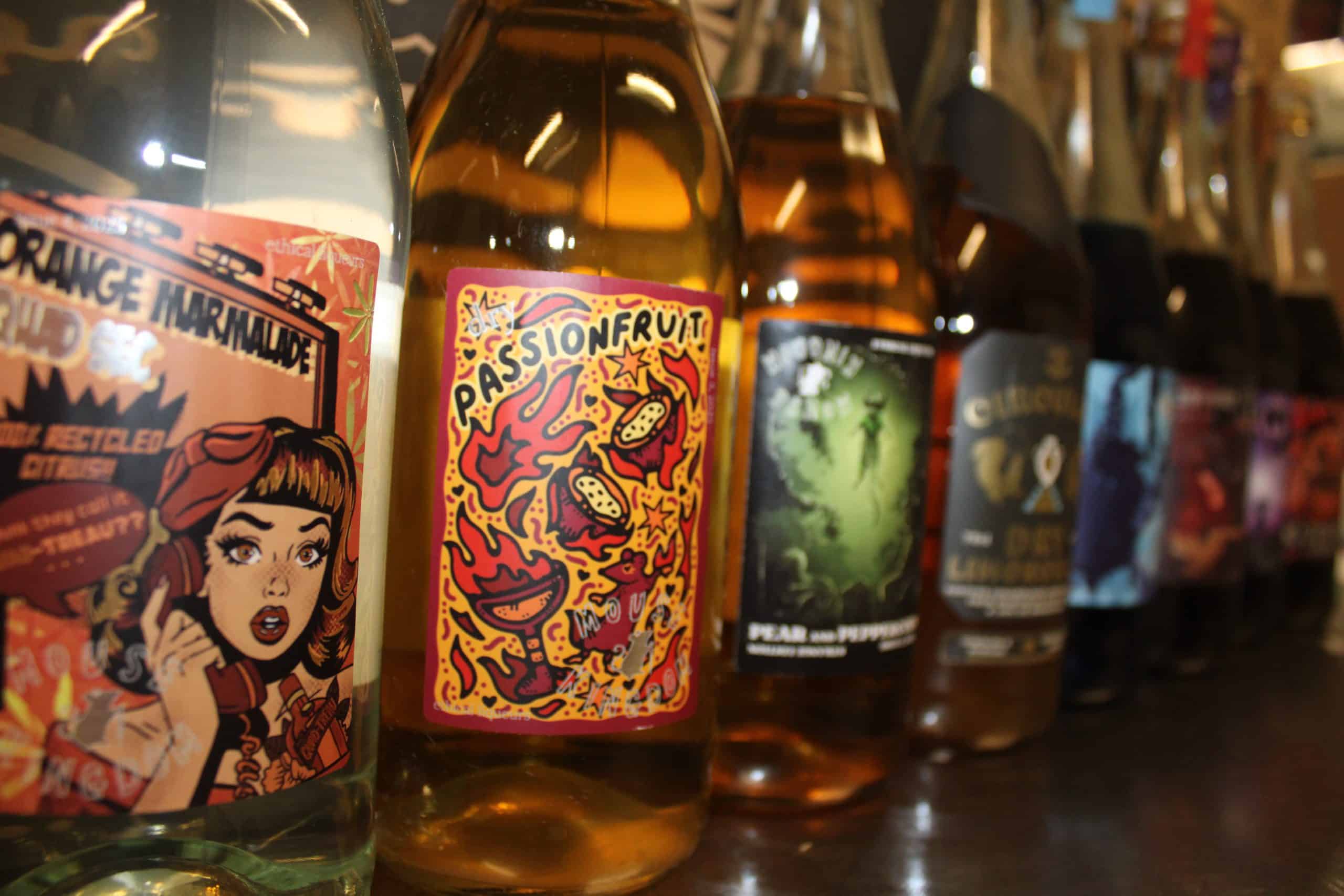
In the UK, an ‘alcoholic beverage’ is any drink with an alcohol content of more than 1.2 per cent alcohol by volume.
But WILDLY, there is absolutely no law demanding alcoholic beverages display an ingredients list.
So, next time you pick up a buzzball from bossman, there is fuck all chance you’ll know what your cocktail contains.
Let alone where the mystery ingredients came from, which farmers grew them and how. Details on the pesticides involved in production or what, if anything, these producers were paid, in which part of the world. Or whether its made from real ingredients or flavourings, sourced from Milton Keynes.
Why?
UK drinks ingredients: an opportunity to obscure and greenwash?
“We built a brand to speak about this,” says Felix Crosse, Founder, Mouse Kingdom.
“Every UK producer in our industry doesn’t disclose ingredients at all – it isn’t required in the UK.”
“These are big names: Au, Buzzballs, Tesco, Cointreau, Chambord, Kahlua, Bols, Aldi.”
“I run Mouse Kingdom on the idea that transparency and radical accountability are essential to producing a liquid which people trust.”
Why aren’t big brands doing the same?
Big brand disclosure and a culture of silence
If producers don’t tell consumers what’s in their drinks, it’s impossible for cocktail consumers and bars to apply any health, ethics, conscience or environmental purpose to what they buy.
If your only business driver is money, this is good news.
“You might prefer to avoid drinks using lemons grown in Peru, if you’re worried about the climate costs involved in transportation to the UK, decent wages for Peruvian farmers or land grabbing, for example,” says Felix.
“None of us know what’s in big brand drinks.”
Mouse Kingdom tells the truth. “We’ve been collecting waste lemons from bars in Manchester for 2 years now”. We will even tell you exactly where we get them: Bar Posie and Rudys Pizza Ancoats.
“We collect lemon peel as a waste ingredient, to repurpose and create a flavour which otherwise would’ve been discarded.”
Making exceptional Liqueurs. No waste. Fully, voluntarily-listed local ingredients. Radical transparency.
Taxing purposeful choice?
Remember, alcohol is big business. The Office for Budget Responsibility (OBR) estimates that alcohol duty revenue was £12.5 billion in 2024/25, and that it will rise to £14.1 billion in 2030/31.
That’s a lot of tax revenue for the UK. But truth, knowledge and education is still slipping through the gaps, we need to trust our consumer and tell them what’s in the RTD’s and cocktails they sup.
Leave a Reply